Lifting Straps vs Hooks: Which One Should You Use (and When)?
If you train hard long enough, you run into a frustrating ceiling.
Your back feels strong. Your posterior chain feels ready. Your lungs are fine.
But your grip gives out first.
That moment — when the bar starts slipping before the target muscle is even close to failure — is where most lifters start looking at straps or hooks. Both are tools designed to extend your ability to hold the bar. But they are not the same tool, and they don’t create the same training effect.
If you care about strength, hypertrophy, long-term progress, and actually understanding why you’re using something, this matters.
Let’s break it down properly.
What Lifting Straps Actually Do
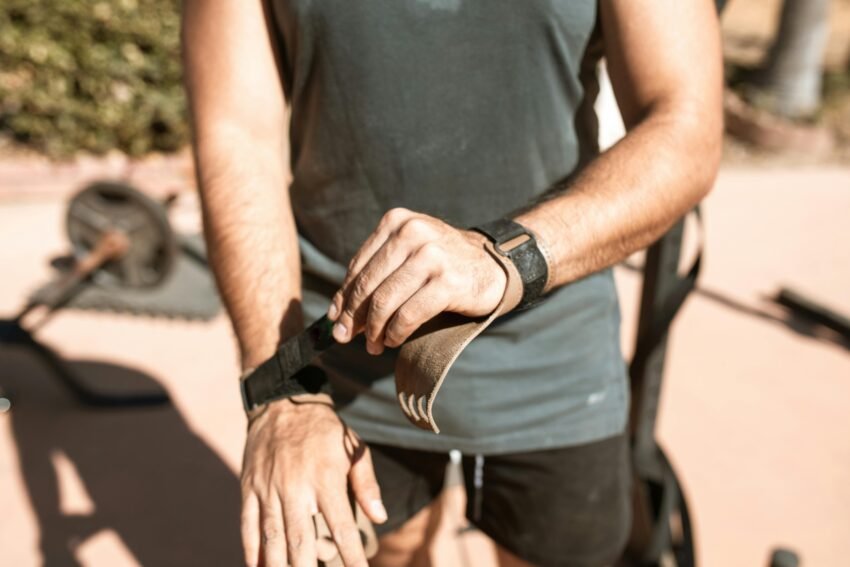
Lifting straps are typically made from cotton, nylon, or leather. They loop around your wrist and then wrap around the bar. When used correctly, they create a friction lock between your hand and the barbell.
But here’s the key: straps do not remove your grip entirely.
You are still squeezing the bar. Your hands are still involved. The strap simply reinforces your grip so it doesn’t fail prematurely.
That distinction is important.
When you use straps on heavy Romanian deadlifts or high-volume barbell rows, your fingers still contract. Your forearms still work. The difference is that your grip endurance no longer limits your back, glutes, or hamstrings.
For hypertrophy-focused lifters, that’s huge.
Instead of cutting a set short because your hands are fatigued, you can push the target muscle where it needs to go. Instead of thinking about “don’t drop it,” you can think about driving elbows back or keeping lats tight.
Straps preserve technique under fatigue. They allow more total volume. And when used intelligently, they still allow grip strength to develop.
if you want to see our begginners guide post on What to Look for in Weight Lifting Straps (Before You Buy the Wrong Pair), Click here.
What Lifting Hooks Actually Do
Hooks take a different approach.
Instead of wrapping fabric around the bar, hooks use a rigid metal or reinforced hook attached to a wrist strap. You place the hook under the bar and let it carry most of the load.
The difference in feel is immediate.
With hooks, grip involvement drops dramatically. You’re not locking the bar with friction — you’re hanging the weight from your wrist via the hook.
For beginners with very weak grip strength, hooks can feel like a revelation. Suddenly they can hold onto loads that would normally roll right out of their hands. For someone rehabbing a finger strain or dealing with hand limitations, they can be useful.
But there’s a tradeoff.
Because hooks remove so much grip demand, they also remove a large portion of forearm engagement and fine bar control. The bar feels less “connected” to your hand. On controlled machine movements, that might not matter much. On heavy free-weight rows or dynamic pulls, you can feel the difference.
In other words, Hooks solve grip failure by bypassing it almost entirely. Straps solve it by reinforcing it.
If you would like to see a review on our Favorite Pair of Weightlifting Hooks, Click here.
Control, Carryover, and Long-Term Progress
If your goal is long-term strength development, control matters.
With straps, you maintain a natural pulling pattern. The bar still sits in your palm. You still have to squeeze. You still manage bar path. The carryover to raw lifts is better because you’re training in a similar position to how you would without assistance.
With hooks, the mechanical relationship changes. Because the load is suspended from a hook, small adjustments in wrist position can change how the bar hangs. For heavy shrugs or controlled cable rows, that may not be an issue. For free-weight deadlifts or barbell rows, some lifters feel less stable.
This is why many experienced strength athletes default to straps over hooks once technique improves.
Hooks can help you hold weight. Straps help you train better.
Deadlifts: Which Makes More Sense?
For deadlifts, straps are generally the stronger long-term tool.
They allow you to overload your posterior chain without your hands becoming the limiting factor, but they still preserve pulling mechanics. They’re especially useful during volume blocks, hypertrophy phases, and high-rep accessory deadlift work.
Hooks can work for beginners who simply cannot hold the bar yet. But as weights climb, many lifters prefer the security and control of a properly wrapped strap.
If you compete in powerlifting, neither tool is allowed in competition. But in training, straps are commonly used strategically to manage fatigue while still building strength.
Back and Hypertrophy Training
For back development, straps usually win.
When you’re trying to grow lats, mid-back, traps, and rear delts, your limiting factor should be those muscles — not your forearms.
Straps let you extend sets, maintain tension, and focus on contraction quality. That matters when you’re chasing real hypertrophy. Hooks can still work in machine-based environments, particularly for very heavy shrugs or fixed-handle rows. But many lifters report that hooks feel slightly less stable on free weights, especially when trying to maintain precise elbow paths.
If your training emphasizes mind-muscle connection and controlled reps, straps typically feel more natural.
Do They Ruin Grip Strength?
They only ruin grip strength if you use them poorly.
If every warm-up, every working set, and every pulling movement is done with assistance, your grip will stagnate.
The smarter approach is simple:
Warm up without assistance. Build raw grip capacity regularly. Use straps or hooks when the goal shifts from grip training to target muscle overload.
You can even program grip directly — loaded carries, dead hangs, thick bar holds, towel pull-ups.
Grip strength should be trained intentionally, not left to chance.
Straps and hooks are tools to manage fatigue, not substitutes for strength.
So Which Should You Choose?
If you’re serious about strength and hypertrophy, lifting straps are the more versatile, long-term investment. They preserve control, maintain some grip involvement, and scale better as your lifts improve.
Hooks have a place. They can help beginners who struggle to hold weight at all. They can assist lifters dealing with temporary grip limitations. They can be useful on certain machines or very heavy shrug sessions.
But for most lifters training consistently, straps offer better carryover, better feel, and better progression potential.
Hooks are helpful in specific situations.
Straps are part of a structured training system.
The Real Takeaway
This isn’t about which tool is “stronger.” It’s about understanding why you’re using it.
If your grip is limiting your back development, use assistance intelligently. If your goal is stronger pulls and bigger back growth, choose the tool that supports that without sacrificing mechanics.
Grip strength matters. Back development matters. Smart lifters know when to train one and when to protect the other.
Train with intention.
If you found this post to be helpful, then you may be interested in the rest of our blog page here.
Discover more from GearAffiliate
Subscribe to get the latest posts sent to your email.