Heavy-Duty Grip Support for Deadlifts, Rows, Shrugs & Pull-Ups
If you’ve ever had your grip fail before your back, traps, or lats were actually fatigued, you already understand the problem weight lifting hooks are meant to solve.
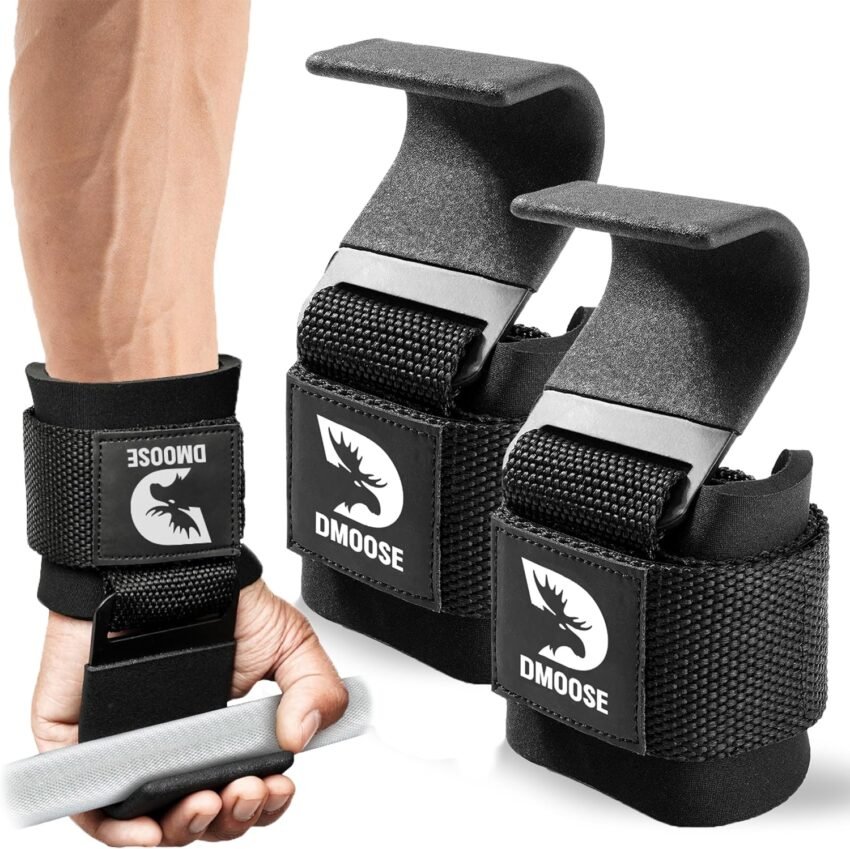
The DMoose Fitness Weight Lifting Hooks are designed to take your forearms out of the limiting factor equation — allowing you to push heavier loads, higher volume, and more focused back training without your hands giving out first.
This review breaks down exactly who these hooks are for, how they perform in real training scenarios, and whether they’re worth adding to your gym bag.
First Impressions & Build Quality
- Strong steel hook construction
- Secure anti-rip strap
- Good value for durability
- Can feel bulky for small wrists
- Takes a few extra seconds to set up
Right away, the DMoose hooks feel solid.
They combine:
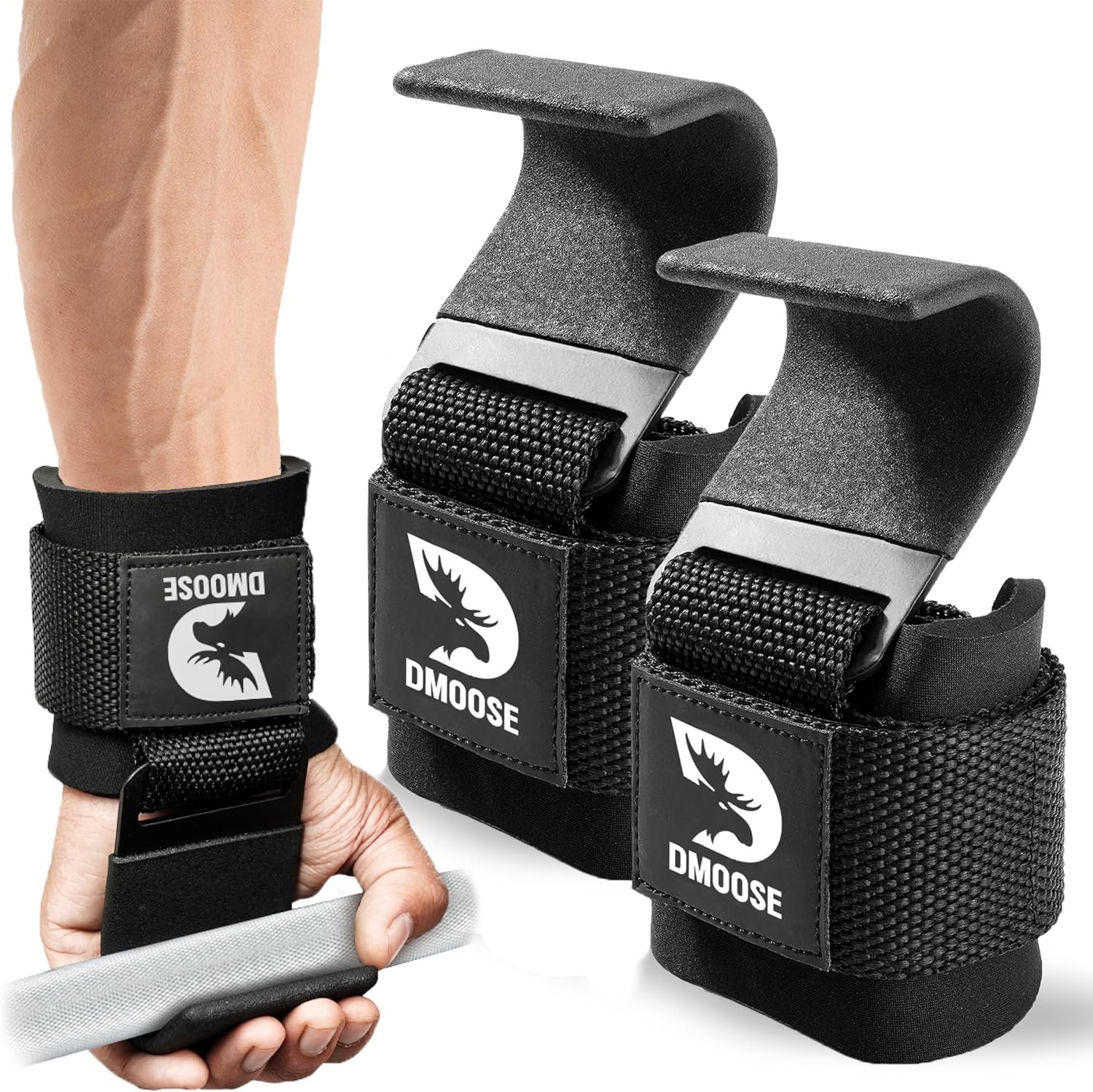
- Heavy-duty steel hooks with a non-slip coating
- Anti-rip reinforced nylon straps
- Thick wrist padding for support and comfort
- Secure Velcro fastening system
The stitching is tight and reinforced where tension is highest — a critical detail many cheaper hooks get wrong. You don’t want the strap separating from the hook under load.
The hook itself is thick and slightly curved, making it easy to wrap around a barbell or pull-up bar without awkward positioning.
This is important because awkward hooks can slow down your setup and kill rhythm during heavy sets.
Comfort & Wrist Support
One of the most overlooked aspects of lifting hooks is wrist comfort.
DMoose includes thick neoprene-style wrist padding that distributes pressure evenly. During heavy shrugs or rack pulls, the pressure doesn’t dig directly into the wrist bones — it feels stable and braced.
The Velcro strap is wide enough to:
- Prevent wrist rolling
- Reduce shifting mid-set
- Stay tight during higher-rep pull sessions
For lifters who already use wrist wraps, these hooks provide support without needing an additional wrap layer.
Performance in the Gym
Let’s break this down by movement.
Deadlifts
Hooks shine most during:
- High-rep deadlifts
- Heavy rack pulls
- RDLs
- Bodybuilding-style back days
With the DMoose hooks:
- Grip fatigue drops dramatically
- You can focus on driving hips and bracing
- Double overhand becomes manageable at heavier weights
These are not meant to replace grip training entirely — but they’re excellent for hypertrophy-focused sessions where your back should be the limiting factor, not your fingers.
Pull-Ups & Lat Pulldowns
For pull-ups:
- Setup takes a few seconds to wrap the hook
- Once locked in, they feel secure
- You can focus on scapular depression and lat contraction
This is especially useful for:
- Weighted pull-ups
- High-volume pull-up programs
- Lifters with sweaty hands
On lat pulldowns and cable rows, they eliminate grip strain and allow smoother reps.
Rows & Shrugs
Heavy barbell rows and shrugs are where these really feel valuable.
During heavy shrug sets:
- No bar rolling
- No forearm pump limiting reps
- Better mind-muscle connection to traps
For bodybuilding or upper-back specialization blocks, that matters.
Durability & Longevity
The anti-rip nylon strap is thick and reinforced. Under normal gym use (even heavy use), these should last a long time.
Things that improve durability:
- Proper wrapping before load
- Avoiding sudden jerking motions
- Letting them air dry if they get sweaty
The steel hook coating also helps reduce bar scratching and wear.
For the price range, durability is above average compared to generic Amazon lifting hooks.
Who Should Use Lifting Hooks?
These are ideal for:
- Bodybuilders focused on back hypertrophy
- Lifters with grip limitations
- People recovering from minor finger strain
- Anyone training higher-rep deadlifts
They are not ideal if:
- You’re training for grip sport competitions
- You want to maximize raw grip strength every session
- You rely on hook grip for powerlifting competition
Think of these as a tool — not a crutch.
Pros & Cons
Pros
- Strong steel hook construction
- Thick wrist padding
- Secure anti-rip strap
- Helps overload back movements
- Good value for durability
Cons
- Takes a few extra seconds to set up
- Can feel bulky for small wrists
- Reduces grip stimulus if overused
Hooks vs Traditional Straps
Traditional straps wrap around the bar and require some technique to secure tightly.
Hooks:
- Are faster to set
- Require less wrapping skill
- Provide quicker attachment during drop sets
If you train with time efficiency in mind, hooks are convenient. If you care about progressive grip adaptation, traditional straps allow slightly more hand engagement.
If you are curious to see what we think of Hooks vs Straps in depth, check out our post here.
Final Verdict
- Strong steel hook construction
- Secure anti-rip strap
- Good value for durability
- Can feel bulky for small wrists
- Takes a few extra seconds to set up
The DMoose Fitness Weight Lifting Hooks deliver exactly what they promise:
Heavy-duty grip assistance that allows you to overload pulling movements safely and confidently.
They are especially useful for:
- Back day intensity techniques
- Shrug overload work
- Deadlift accessory sessions
- High-volume pull-up programming
If grip strength is holding your back development hostage, these hooks can free you up to train harder where it actually counts.
Used intelligently — not every set, not every session — they can be a powerful addition to a serious training setup.
For lifters chasing bigger traps, thicker lats, and stronger pulls without premature grip failure, they’re a practical investment.
Discover more from GearAffiliate
Subscribe to get the latest posts sent to your email.